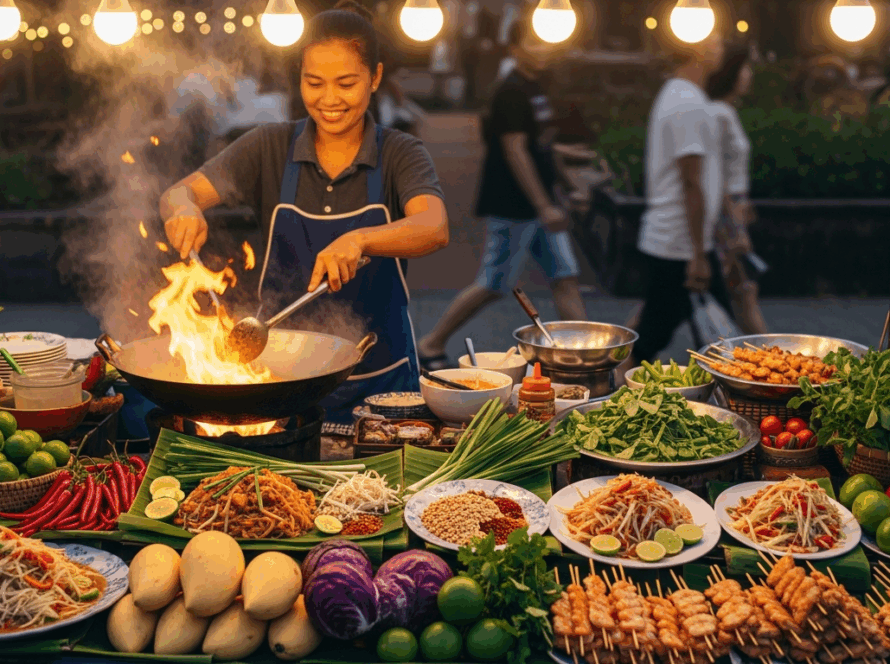
Taste of Thailand: A Culinary Journey Through Thai Food & Street Food
Thailand, the land of smiles, is equally a land of incredible flavors. If you’re planning a trip or simply want to explore the world of Thai cuisine, get ready for a sensory explosion. From fragrant curries to sizzling street food, food in Thailand offers an unparalleled culinary adventure. This guide will take you on a journey through iconic dishes and hidden gems, showcasing the best of Thai street food and traditional fare. Prepare to tantalize your taste buds and discover why Thai cuisine is loved worldwide!
The Must-Try Dishes of Thailand
Thai cuisine is a symphony of sweet, sour, spicy, salty, and umami. Here are some dishes that you simply cannot miss:
- Pad Thai: The quintessential Thai noodle dish, stir-fried with shrimp, tofu, peanuts, bean sprouts, and a tangy tamarind sauce.
- Green Curry: A creamy and aromatic curry made with green chili paste, coconut milk, bamboo shoots, and your choice of meat or vegetables.
- Tom Yum Soup: A hot and sour soup with shrimp, lemongrass, galangal, kaffir lime leaves, and chili.
- Mango Sticky Rice: A sweet and satisfying dessert made with sticky rice, fresh mango, and coconut milk.
- Massaman Curry: A rich and flavorful curry influenced by Persian cuisine, featuring potatoes, peanuts, and a blend of spices.
These dishes represent just a fraction of the incredible culinary landscape of Thailand. Each region boasts its own unique specialties and variations, making it a truly diverse and exciting food destination. Don’t be afraid to try new things and explore the local flavors! For a deeper dive into the origins of some of these dishes and their cultural significance, explore resources like Thai food history.
Exploring the World of Thai Street Food
Thai street food is a vibrant and integral part of the Thai culinary experience. From bustling night markets to humble roadside stalls, you’ll find a plethora of delicious and affordable eats.
- Satay: Grilled marinated meat skewers served with peanut sauce and cucumber relish.
- Som Tum (Papaya Salad): A spicy and refreshing salad made with shredded green papaya, tomatoes, green beans, peanuts, and a tangy dressing.
- Boat Noodles (Kuay Teow Reua): A flavorful noodle soup made with pork blood, herbs, and spices.
- Roti: A sweet or savory flatbread cooked on a griddle and often filled with bananas, Nutella, or cheese.
- Grilled Meats: From chicken to pork to seafood, grilled meats are a staple of Thai street food, often marinated in aromatic spices.
Navigating the world of Thai street food can be daunting, but it’s definitely worth the effort. Be sure to look for stalls with a high turnover of customers, as this is usually a sign of freshness and quality. Don’t be afraid to try something new and ask the vendor for recommendations!
Regional Variations in Thai Cuisine
Thailand’s diverse geography and cultural influences have resulted in distinct regional variations in its cuisine. Each region boasts its own unique ingredients, flavors, and cooking techniques.
- Northern Thailand (Lanna Cuisine): Known for its milder flavors and use of ingredients like sticky rice, herbs, and fermented meats. Dishes like Khao Soi (curry noodle soup) and Sai Oua (Northern Thai sausage) are must-tries.
- Northeastern Thailand (Isan Cuisine): Characterized by its bold flavors, spicy chilies, and use of fermented fish sauce (pla ra). Dishes like Som Tum (papaya salad) and Larb (minced meat salad) are popular.
- Central Thailand: A blend of influences, featuring dishes like Green Curry, Pad Thai, and Tom Yum Soup. The cuisine is often more refined and uses a wider variety of ingredients.
- Southern Thailand: Influenced by Malay cuisine, featuring dishes like Massaman Curry and seafood dishes with coconut milk and spices.
Exploring these regional variations is a great way to deepen your understanding and appreciation of Thai cuisine. Consider taking a cooking class in a specific region to learn more about the local ingredients and techniques.
Tips for Enjoying Thai Food to the Fullest
To truly savor the experience of eating food in Thailand, here are a few tips to keep in mind:
- Embrace the Spice: Thai food is known for its spiciness, but don’t be afraid to ask for it mild if you’re not used to it.
- Learn Some Basic Thai Phrases: Knowing a few basic phrases like “mai pet” (not spicy) and “aroi mak” (very delicious) can go a long way.
- Drink Plenty of Water: The spice can be intense, so stay hydrated.
- Be Adventurous: Don’t be afraid to try new things and step outside your comfort zone.
- Eat with a Spoon and Fork: This is the traditional way to eat most Thai dishes.
Is Thai Food Healthy?
Many Thai dishes incorporate fresh vegetables, lean proteins, and herbs. These can provide essential nutrients. However, some dishes are high in sodium, sugar, and fat, especially those prepared with coconut milk or fried. Choosing dishes with lots of fresh vegetables and lean proteins, and limiting portions of fried or sugary items, can contribute to a healthier eating pattern.
Conclusion: A Culinary Adventure Awaits
From the bustling streets of Bangkok to the serene beaches of Phuket, food in Thailand is an unforgettable experience. Whether you’re a seasoned foodie or a curious traveler, Thai cuisine offers something for everyone. So, pack your bags, prepare your taste buds, and get ready for a culinary adventure that will leave you wanting more. Explore local markets, sample authentic dishes, and immerse yourself in the vibrant food culture of Thailand. Ready to start your journey? Book your flight and discover the amazing taste of Thailand today!